


The living room is one of the most important spaces in an Indian home. It is where families spend time together, guests are welcomed, and everyday moments turn into lasting memories. A thoughtfully designed living room should balance comfort, functionality, aesthetics, and the practical needs of everyday life.
Whether you live in a compact apartment in Delhi or a spacious independent house, the right living room interior design ideas can transform your space without making it feel overcrowded or difficult to maintain.
From modern TV unit designs and elegant wall panelling to Indian-inspired colour palettes, smart lighting, and multifunctional furniture, here are 25 living room interior design ideas to inspire your next home makeover.
1. Choose a Modern Neutral Colour Palette
Neutral colours create a timeless foundation for a modern living room. Shades such as warm white, beige, cream, taupe, and soft grey can make the space feel calm and visually cohesive.
For Indian homes, warm neutrals work particularly well with wooden furniture, textured fabrics, and metallic accents.
Design tip: Introduce colour through cushions, rugs, artwork, and decorative accessories. These elements are easier to update than permanent finishes.
2. Create a Statement TV Unit
A well-designed TV unit can become the focal point of your living room. Instead of choosing a bulky cabinet, consider a wall-mounted unit with clean lines, concealed storage, and coordinated finishes.
Popular options include:
- Floating TV consoles
- Wooden fluted panels
- Marble-look back panels
- Minimalist storage cabinets
- Combination units with open shelves
Choose a design that suits the wall dimensions and provides enough storage without overwhelming the room.
3. Add Elegant Wall Panelling
Wall panelling adds texture, depth, and visual interest to an otherwise plain wall. It can create a sophisticated backdrop behind a sofa or television.
Consider vertical wooden slats, subtle geometric patterns, painted MDF panels, or classic decorative mouldings.
For a contemporary Indian home, combine warm wood tones with neutral walls and simple furniture. Keep the detailing proportionate to the room so the design feels refined rather than crowded.
4. Select a Comfortable, Well-Proportioned Sofa
The sofa is often the largest piece of furniture in a living room, making its size and placement especially important.
Choose a sofa based on the available floor area, the number of people in your household, and how the room is used.
Popular options include:
- Compact two- or three-seater sofas
- L-shaped sofas for suitable layouts
- Modular sofas that can be rearranged
- Sofas with removable, washable covers
Before purchasing, measure the sofa, doorways, and access routes to ensure it can be delivered and positioned comfortably.
5. Use Layered Lighting for a Warm Ambience
Lighting influences how the living room looks and feels throughout the day. Instead of relying on a single ceiling light, combine different lighting sources.
Use ambient lighting for overall illumination, floor or table lamps for softer light, and accent lighting to highlight artwork or architectural details.
Cove lighting can create a gentle glow along the ceiling, while wall lights can add character without occupying floor space.
For energy-conscious lighting choices, explore the Bureau of Energy Efficiency for information about energy efficiency in India.
6. Design a Beautiful Accent Wall
An accent wall introduces colour, texture, or a distinctive finish without requiring a complete room makeover.
Ideas include:
- A deep green or muted blue painted wall
- Textured paint in warm earthy tones
- Subtle patterned wallpaper
- Wooden decorative panels
- A gallery wall with coordinated artwork
Choose one main feature and let the rest of the room complement it. Too many competing patterns can make the living room feel visually busy.
7. Bring Nature Indoors with Indoor Plants
Indoor plants can introduce colour, softness, and a natural element to a modern living room.
Place suitable plants near windows, beside the sofa, or in an empty corner. Larger floor plants can fill unused spaces, while smaller plants can sit on shelves or side tables.
Choose varieties according to the amount of natural light available and the level of maintenance you can provide. Avoid overcrowding surfaces with too many pots.
8. Choose a Modern False Ceiling Design
A false ceiling can help integrate lighting and conceal certain services while adding visual interest to the room.
Consider simple perimeter designs, recessed lighting, or restrained geometric details. In smaller apartments, a minimal ceiling design may work better than a heavily layered structure.
Before installation, account for ceiling height, lighting access, ventilation, and maintenance requirements.
The best false ceiling design for a living room is one that complements the overall interior rather than competing with it.
9. Add a Stylish Coffee Table
A coffee table brings the seating arrangement together and provides a practical surface for everyday use.
Choose a design that leaves enough room to move around the sofa. Round tables can work well in tighter layouts, while rectangular tables may suit longer seating arrangements.
Materials such as wood, glass, stone, and metal each create a different effect. For families with young children, consider rounded corners and durable, easy-to-clean finishes.
10. Use Curtains to Enhance the Room
Curtains soften the living room, provide privacy, and help manage sunlight.
For a contemporary look, consider floor-length curtains in neutral colours or subtle patterns. Sheer curtains can filter daylight, while heavier curtains offer greater privacy and light control.
Where possible, install the curtain rod above the window frame and allow the curtains to fall naturally towards the floor. Choose fabrics according to the room’s lighting, ventilation, and maintenance needs.
11. Create a Gallery Wall
A gallery wall gives the living room a personal touch through photographs, artwork, illustrations, or framed prints.
You can use a symmetrical arrangement for a formal appearance or combine different frame sizes for a more relaxed style.
Before hanging the frames, arrange them on the floor to test the layout. Maintain consistent spacing and choose artwork that complements the room’s colour palette.
A thoughtfully arranged gallery wall can make a simple living room feel more individual without requiring expensive materials.
12. Incorporate Indian Design Elements
Modern Indian living rooms can combine contemporary furniture with traditional craftsmanship and cultural details.
Consider incorporating carved wooden accents, handcrafted decor, Indian textiles, brass accessories, or artwork inspired by regional traditions.
The key is balance. Instead of adding traditional elements everywhere, choose a few meaningful pieces that stand out against a simpler modern background.
This approach creates a home that feels contemporary while retaining a connection to Indian design heritage.
13. Make a Small Living Room Feel Spacious
Compact apartments need careful furniture selection and layout planning. The aim is to maintain comfortable movement while making the best use of available space.
Try these ideas:
- Choose furniture that fits the room’s proportions.
- Use wall-mounted storage where practical.
- Select furniture with visible legs to create a lighter appearance.
- Keep walking paths clear.
- Use mirrors strategically to reflect light.
- Avoid excessive decorative accessories.
For more practical solutions, explore these small flat interior design ideas, including multifunctional furniture, vertical storage, and space-saving layouts.
14. Choose a Marble-Look Feature Wall
A marble-look wall can introduce a sophisticated finish behind the television or sofa.
Depending on the design and budget, options include porcelain surfaces, decorative panels, or other suitable materials with a marble-inspired appearance.
White and beige finishes can create a lighter look, while darker patterns may provide stronger contrast.
Consider the room’s lighting and existing furniture before choosing a prominent finish. The objective is to create a coordinated space rather than an overly decorative one.
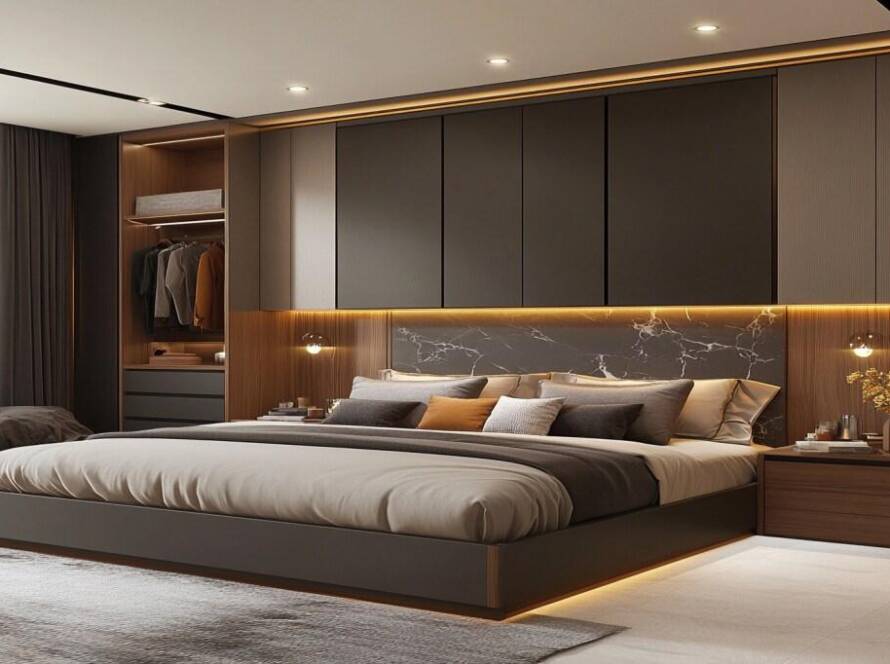
15. Introduce Wooden Finishes for Warmth
Wooden finishes help balance modern materials such as glass, metal, stone, and polished surfaces.
You can incorporate wood through TV units, ceiling details, wall panels, shelving, side tables, or furniture legs.
Light wood tones often suit airy, contemporary interiors, while deeper finishes can create a richer atmosphere.
For a balanced result, repeat the same or complementary wood tones in a few places instead of using too many unrelated finishes.
16. Design an Open Living and Dining Area
Many modern Indian apartments combine the living and dining areas into one shared space. A coordinated design can make the home feel connected while allowing each zone to serve its own purpose.
Define the areas using furniture placement, rugs, pendant lighting, or subtle differences in wall finishes.
For example, position the sofa to establish the living area and use a dining pendant to highlight the dining table. Keep the main circulation path clear between the entrance, seating area, and dining space.
If you are planning a larger home makeover, consider how the living room connects with the rest of your home interior design project.
17. Use Smart Storage Furniture
A stylish living room should also be practical. Storage furniture helps keep remote controls, books, board games, cables, and other everyday items organised.
Useful options include:
- TV units with concealed drawers
- Storage ottomans
- Sideboards
- Nesting tables
- Built-in shelving
- Sofas with integrated storage, where suitable
Choose storage according to what you actually need to keep. Too many cabinets can make the room feel enclosed, so combine closed storage with a limited number of open display areas.
18. Add a Statement Chandelier or Pendant Light
A statement light can draw attention upwards and add character to the living room.
Choose a chandelier or pendant that suits the ceiling height, room dimensions, and overall interior style. Sculptural designs can work well in contemporary spaces, while understated metallic finishes can complement more classic interiors.
Ensure the light provides appropriate illumination and does not obstruct movement or sightlines. In rooms with low ceilings, a flush-mounted fixture may be more practical.
19. Use Textured Wallpaper
Wallpaper can introduce depth and pattern without requiring extensive architectural changes.
Popular options include linen-inspired textures, subtle geometric prints, botanical patterns, and understated metallic details.
A feature wall behind the sofa or TV unit is often enough to create a visual highlight.
Before selecting wallpaper, consider cleaning requirements, moisture exposure, surface preparation, and whether the pattern will work with your furniture.
20. Create a Cosy Reading Corner
An unused corner can become a comfortable reading area with just a few carefully chosen pieces.
Add a compact armchair, a floor lamp, a small side table, and a shelf or basket for books. Position the chair near natural light where possible.
Choose fabrics and finishes that complement the rest of the living room so the reading corner feels integrated rather than separate.
This is particularly useful in homes where a dedicated study room is not available.
21. Choose a Contemporary Colour Combination
The right colour combination can define the character of a living room. Modern Indian interiors can use neutral foundations with carefully selected accent shades.
Consider these combinations:
| Colour combination | Overall effect |
|---|---|
| Beige and warm white | Soft, calm, and timeless |
| Sage green and natural wood | Relaxed and nature-inspired |
| Navy blue and cream | Rich and sophisticated |
| Terracotta and beige | Warm and earthy |
| Charcoal grey and light wood | Contemporary and balanced |
| Muted olive and off-white | Subtle and understated |
Test paint samples under both daylight and artificial lighting before finalising the palette. Colours can look different depending on the direction of the windows and the type of lighting used.
22. Incorporate Decorative Mirrors
Mirrors can reflect daylight, add visual depth, and make a room appear more open.
Consider a large mirror above a console, a vertical mirror near a window, or a decorative mirror on a feature wall.
Choose the size and frame according to the surrounding furniture. Avoid positioning mirrors where they reflect clutter or create distracting glare.
For smaller living rooms, a well-placed mirror can contribute to a brighter and more spacious appearance.
23. Add Rugs to Define the Seating Area
A rug can anchor the furniture arrangement, introduce texture, and help define the living room within an open-plan layout.
Choose a size that relates to the seating area rather than one that appears disconnected from the furniture. Ideally, the front legs of the main seating pieces should sit on the rug when the layout allows.
Consider easy-to-maintain materials if the living room experiences frequent use, pets, or heavy foot traffic.
A rug should complement the sofa, curtains, and flooring without introducing too many competing patterns.
24. Keep the Design Minimal and Clutter-Free
Minimalism is not about leaving a room empty. It is about choosing each element carefully and ensuring it serves a purpose.
Use a restrained selection of furniture, coordinated finishes, useful storage, and a few decorative accents.
Keep tabletops relatively clear and avoid filling every wall with artwork or shelves. Allow some empty space around furniture and decorative objects so the design can breathe.
This approach is especially effective in compact Delhi apartments where every square foot matters.
25. Personalise the Living Room Around Your Lifestyle
The most successful living room design reflects the people who use it.
A family that entertains guests may need flexible seating and durable fabrics. A household that enjoys watching films may prioritise a comfortable sofa and carefully planned TV placement. Someone who works from home may need a compact desk that blends into the room.
Before choosing finishes or furniture, consider how you use the living room every day.
At Petals Art Decor, the design approach focuses on understanding how people live, planning layouts thoughtfully, and selecting materials and details that support both functionality and individual preferences.
How Much Does Living Room Interior Design Cost in Delhi?
The cost of a living room makeover depends on the size of the space, the furniture selected, the materials used, the complexity of the design, and the amount of work required.
A refresh involving paint, curtains, lighting, and accessories will generally require a different budget from a complete renovation involving custom furniture, wall panelling, electrical changes, and false ceiling work.
Before starting, prepare a clear scope of work and confirm what is included in each quotation. Ask about material specifications, installation, electrical work, taxes, and any additional charges.
If your living room is part of a complete apartment project, use these related guides to understand the broader budget:
- 2BHK Interior Design Cost in Delhi: Complete Budget Guide
- 3BHK Interior Design Cost in Delhi: Budget, Materials & Timeline
These guides can help you plan the overall home budget rather than considering the living room in isolation.
Common Living Room Interior Design Mistakes to Avoid
Even attractive furniture and premium finishes may not produce a comfortable living room if the layout is poorly planned.
Avoid these common mistakes:
- Choosing oversized furniture: Large sofas and tables can restrict movement.
- Using too many statement elements: Competing feature walls, lighting, and patterns can make the room feel busy.
- Ignoring lighting layers: A single ceiling fixture may not provide suitable light for every activity.
- Blocking natural light: Heavy window treatments or poorly placed furniture can make the room feel darker.
- Forgetting storage: Visible clutter can undermine an otherwise well-designed interior.
- Following trends without considering lifestyle: A design should work for your household, maintenance preferences, and long-term needs.
Frequently Asked Questions
What are the latest living room interior design ideas for modern Indian homes?
Popular approaches include neutral colour palettes, wooden finishes, textured accent walls, modern TV units, layered lighting, multifunctional furniture, and selected Indian-inspired decor. The best choices depend on the home’s layout and the homeowner’s preferences.
How can I make my living room look luxurious?
Focus on good proportions, coordinated finishes, comfortable furniture, layered lighting, and carefully selected decorative details. A cohesive design often looks more refined than a room filled with expensive but unrelated elements.
Which colours are best for an Indian living room?
Warm white, beige, cream, sage green, muted olive, terracotta, and navy blue can all work well. Choose colours according to the amount of daylight, room size, furniture finishes, and overall atmosphere you want to create.
How do I design a small living room in a 2BHK flat?
Measure the room first, choose appropriately sized furniture, use vertical or concealed storage, and keep pathways clear. Wall-mounted TV units, mirrors, compact tables, and layered lighting can help make the space feel more organised.
Is a false ceiling necessary for a living room?
No. A false ceiling is optional. It may help integrate lighting and conceal services, but a simple ceiling with well-planned light fixtures can also create an attractive result.
How do I choose the right TV unit for my living room?
Consider the wall dimensions, television size, storage requirements, cable management, and furniture layout. Choose a design that complements the room and leaves sufficient space for comfortable movement.
Should the living room and dining area have the same interior design?
They do not need to be identical, but a coordinated colour palette, complementary materials, and consistent design details can help the spaces feel connected. Rugs, furniture placement, and lighting can distinguish the two zones.
Conclusion
A well-designed living room brings together comfort, functionality, and personal style. From modern TV units and textured walls to thoughtful lighting, Indian-inspired accents, and practical storage, the right choices can transform the way your home looks and feels.
The key is to create a cohesive design that suits your space, lifestyle, and budget rather than following every trend.
If you are planning a living room makeover or a complete home transformation, connect with Petals Art Decor to explore interior design solutions for your home in Delhi NCR.

1 Comment