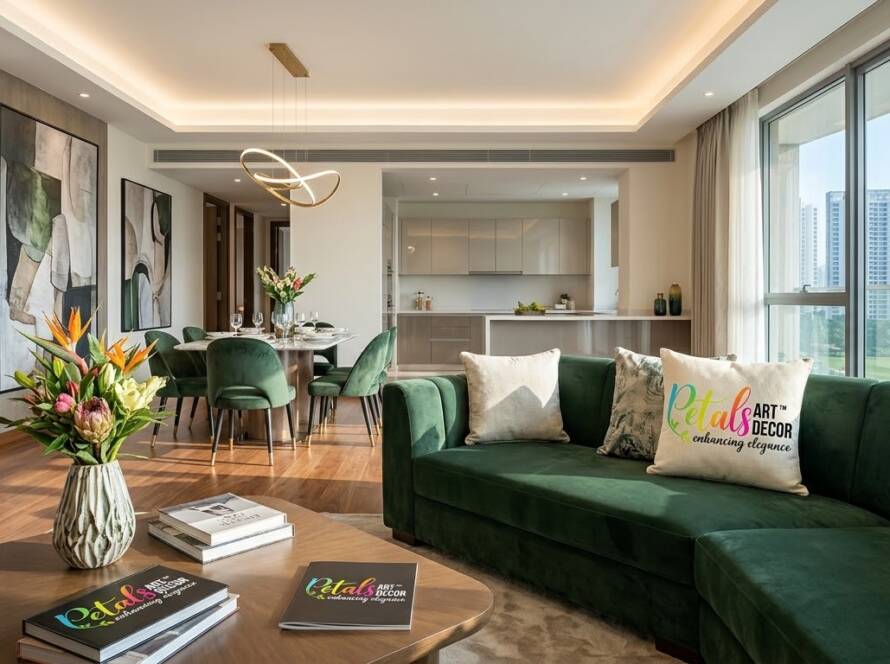
A bedroom should be more than a place to sleep. It should be a comfortable, functional, and personal space where you can relax and recharge. The right bedroom interior design can improve the way a room looks while making everyday activities more convenient.
Whether you live in a compact apartment or a spacious home in Delhi NCR, thoughtful furniture placement, suitable colours, layered lighting, and smart storage can transform your bedroom.
From modern headboard designs and elegant wardrobes to cosy lighting, traditional Indian accents, and space-saving furniture, these 25 bedroom interior design ideas for Indian homes will help you plan a bedroom that combines style with everyday comfort.
1. Choose a Calming Bedroom Colour Palette
Colour influences the atmosphere of a bedroom. Soft, coordinated shades can create a relaxing environment without making the room feel plain.
Consider warm white, beige, cream, sage green, dusty blue, or muted taupe. These colours work well with wooden furniture, textured bedding, and understated decorative accents.
For a more dramatic look, introduce a deeper colour behind the bed while keeping the remaining walls lighter.
Design tip: Test paint samples under natural daylight and your bedroom’s artificial lighting before finalising the colour scheme.
2. Design a Statement Headboard Wall
The wall behind the bed is often the natural focal point of a bedroom. A thoughtfully designed headboard wall can add character without requiring extensive decoration throughout the room.
Popular options include:
- Upholstered headboards
- Vertical wooden slats
- Decorative wall mouldings
- Fabric or textured wall panels
- Wooden and laminate combinations
Choose a design that complements the bed, bedside tables, and wardrobe finishes. In a small bedroom, keep the detailing proportionate to the available wall space.
3. Install a Sliding Wardrobe
A sliding wardrobe is a practical choice for bedrooms where space between the bed and wardrobe is limited.
Unlike conventional hinged doors, sliding doors do not require the same opening clearance. This can make furniture placement easier in compact apartments.
Consider plain laminates, wood-look finishes, or mirrored panels. Inside the wardrobe, combine hanging sections, drawers, shelves, and organisers according to your storage requirements.
If you are planning interiors for a compact apartment, explore these small flat interior design ideas for additional space-saving solutions.
4. Use Warm, Layered Lighting
Bedroom lighting should support different activities, from relaxing before sleep to reading or getting dressed.
A practical lighting plan includes:
- Ambient lighting for general illumination
- Bedside lights for reading
- Wardrobe lighting for visibility
- Accent lighting for decorative features
Warm-white lighting can create a comfortable evening atmosphere, while brighter task lighting is useful around dressing and work areas.
For energy-efficient lighting options in India, consult the Bureau of Energy Efficiency.
5. Create a Modern False Ceiling
A false ceiling can introduce subtle architectural detail and provide space for integrated lighting.
Consider a simple perimeter design, recessed lights, or a restrained cove-lighting detail. Avoid elaborate ceiling structures if the room already has limited height.
Before finalising the design, consider ceiling height, fan placement, air-conditioning requirements, access to electrical services, and future maintenance.
A simple ceiling with well-positioned lights can be just as effective as a more elaborate design.
6. Choose a Bed with Built-In Storage
In Indian apartments, bedrooms often need to accommodate clothing, bedding, luggage, and seasonal items. A storage bed can help use the available floor area more efficiently.
Options include beds with pull-out drawers or hydraulic lift-up storage.
Before selecting one, consider how frequently you need access to stored items. Drawers are convenient for everyday belongings, while lift-up storage can be useful for less frequently used items.
Make sure there is enough clearance to open the storage mechanism comfortably.
7. Add Elegant Bedside Tables
Bedside tables combine everyday convenience with decorative value. They provide a place for a lamp, phone, book, or other essentials.
Choose compact tables if the bed occupies most of the room. Floating bedside shelves can be useful when floor space is limited, while drawer units offer concealed storage.
For a coordinated appearance, match the bedside tables to the bed or wardrobe. Alternatively, use complementary finishes for a more individual look.
8. Incorporate Wooden Finishes
Wooden finishes add warmth and texture to bedroom interiors. They can work with modern, minimalist, contemporary, and traditional Indian styles.
Consider using wood-look laminates on wardrobes, wooden headboard panels, bedside tables, or a dressing unit.
Light wood tones can create an airy atmosphere, while deeper finishes introduce contrast and richness. Repeat selected finishes throughout the room to create a cohesive design rather than mixing too many unrelated wood tones.
9. Design a Functional Dressing Area
A dedicated dressing area can make the bedroom more organised, even when a separate dressing room is not possible.
A practical setup may include a mirror, compact dressing table, drawer storage, and suitable task lighting.
If space is limited, integrate the dressing area into the wardrobe design. A wall-mounted mirror and narrow floating shelf can also provide a simple solution.
Ensure the arrangement leaves enough room to open drawers, stand comfortably, and move around without obstruction.
10. Use Mirrors to Enhance the Space
Mirrors can reflect light and create the impression of greater visual depth. They are particularly useful in bedrooms with limited natural light.
Consider a full-length mirror, mirrored wardrobe panels, or a decorative mirror near the dressing area.
Position mirrors where they reflect light or a visually appealing part of the room. Avoid placements that reflect clutter or create uncomfortable glare.
For a coordinated result, choose a frame that complements the bedroom’s furniture and finishes.
11. Choose Curtains That Complement the Interior
Curtains affect the bedroom’s appearance, privacy, and light control.
Sheer curtains can soften daylight, while heavier curtains can help block unwanted light and provide greater privacy. A layered arrangement allows you to adjust the room’s brightness throughout the day.
Neutral curtains work well with colourful bedding, while subtle patterns can add interest to a simpler room.
Measure the window carefully before ordering curtains, and consider how the fabric will be cleaned and maintained.
12. Add a Textured Accent Wall
An accent wall can make a bedroom feel more distinctive without decorating every surface.
Options include textured paint, wallpaper, decorative panels, or a contrasting paint colour behind the bed.
Choose the finish according to the room’s lighting, furniture, and overall colour scheme. A subtle texture can add depth, while a stronger pattern may work best in a room with otherwise simple furnishings.
The objective is to create one clear focal point rather than several competing features.
13. Make a Small Bedroom Feel More Spacious
A compact bedroom benefits from careful furniture selection and a layout that prioritises movement.
Consider these practical approaches:
- Select furniture that fits the room’s dimensions.
- Use sliding wardrobes where appropriate.
- Choose wall-mounted bedside shelves.
- Keep the floor and bedside surfaces relatively clear.
- Use light colours and carefully positioned mirrors.
- Incorporate storage into the bed or wardrobe.
For more ideas that apply across the home, read Small Flat Interior Design Ideas: 20 Smart Space-Saving Solutions.
14. Introduce Indian Textiles and Craftsmanship
Modern Indian bedroom interiors can combine contemporary furniture with traditional textiles and handcrafted details.
Consider block-printed cushion covers, embroidered throws, handwoven rugs, or decorative pieces made by Indian artisans.
Use these elements selectively so they complement the room instead of making it feel crowded. A neutral bed and simple headboard can provide a balanced backdrop for more colourful textiles.
This approach allows the bedroom to feel personal while maintaining a contemporary appearance.
15. Create a Cosy Reading Corner
If your bedroom has an unused corner, consider turning it into a small reading area.
A compact armchair, floor lamp, side table, and a few shelves can create a comfortable spot for reading or relaxing.
In smaller rooms, a window-side bench or a comfortable chair that fits neatly beside the bed may be more practical.
Choose furniture that suits the available dimensions and does not interfere with wardrobe access or the main walking path.
16. Plan Wardrobe Interiors Carefully
A wardrobe should be designed around the items you own rather than simply its external appearance.
Think about the balance of hanging space, shelves, drawers, accessories, and seasonal storage.
Useful features may include pull-out trays, drawer dividers, shoe storage, and dedicated sections for frequently used clothing.
Before finalising the internal layout, consider the length of garments, the number of users, and whether you prefer folded or hanging storage.
A well-planned wardrobe can make everyday routines easier while helping keep the bedroom organised.
17. Select Bedding That Complements the Room
Bedding can change the appearance of a bedroom without requiring permanent interior modifications.
Choose bedsheets, duvet covers, cushions, and throws that complement the wall colours and furniture finishes.
For a hotel-inspired look, use coordinated neutral bedding with a few contrasting cushions. For a more colourful Indian aesthetic, introduce carefully selected prints, embroidered details, or richer accent shades.
Prioritise comfortable, easy-to-maintain fabrics and avoid using so many cushions that the bed becomes inconvenient for everyday use.
18. Add a Decorative Pendant or Bedside Light
Pendant lights or wall-mounted reading lights can free up bedside table space while introducing a decorative feature.
Consider hanging lights on either side of the bed where the ceiling height and electrical layout allow. Adjustable wall lights can be useful for reading, while decorative pendants can create a more distinctive look.
Ensure the light source is positioned comfortably for the person using the bed and does not cause direct glare.
19. Create a Coordinated Bedroom and Wardrobe Design
The bed, wardrobe, bedside tables, and dressing area should feel like parts of the same design.
This does not mean every element needs to match exactly. Instead, coordinate a few key materials, colours, and finishes.
For example, a neutral wardrobe can work with a wooden headboard and complementary bedside tables. Repeating a selected finish in two or three places can help connect the room visually.
If you are planning an entire apartment, consider how the bedroom palette relates to the living room. These living room interior design ideas for modern Indian homes can help you develop a consistent design direction across connected spaces.
20. Use Wall-Mounted Shelves
Wall-mounted shelves provide storage and display space without taking up as much floor area as a standalone cabinet.
They can hold books, framed photographs, small decorative pieces, or everyday essentials.
Install shelves at a suitable height and secure them properly for the intended load. Avoid placing heavy objects above the bed unless the installation is designed and secured appropriately.
Keep displays simple and leave some open space so the shelves do not become another source of clutter.
21. Choose a Colour Combination That Suits Your Style
The right colour combination can establish the mood of a bedroom.
| Colour combination | Design effect |
|---|---|
| Warm white and beige | Calm and timeless |
| Sage green and natural wood | Soft and nature-inspired |
| Dusty blue and cream | Relaxed and understated |
| Terracotta and off-white | Warm and earthy |
| Charcoal grey and light wood | Contemporary and balanced |
| Blush pink and warm white | Soft and elegant |
| Olive green and beige | Rich but restrained |
Test colours in the actual room before making a final decision. Natural light, artificial lighting, and the direction of the windows can affect how each shade appears.
22. Add a Compact Study or Work Area
A bedroom can accommodate a small work area when there is no separate study room.
A slim desk, wall-mounted worktop, or desk integrated into a wardrobe can provide a practical solution.
Add task lighting and a comfortable chair, and use shelves or drawers to keep work materials organised.
Where possible, position the desk so that it does not interfere with the bed, wardrobe, or natural movement through the room. If you work from home regularly, plan the setup for comfort as well as appearance.
23. Keep Bedroom Decor Minimal
A bedroom should support rest and relaxation, so avoid filling every available surface with decorative items.
Choose a few elements that contribute to the overall design, such as artwork above the bed, a bedside lamp, a rug, or a small collection of personal objects.
Use concealed storage for everyday belongings and keep the main walking areas clear.
Minimal decor does not have to feel empty. Carefully selected materials, lighting, textiles, and furniture can create a rich and comfortable atmosphere without visual clutter.
24. Improve the Layout Before Buying New Furniture
Sometimes, the best bedroom makeover begins with rearranging the existing furniture.
Check whether the bed blocks natural light, whether wardrobe doors open comfortably, and whether there is enough space to move around the room.
Measure the bed, wardrobe, bedside tables, and dressing unit before purchasing replacements.
For a complete apartment project, the bedroom layout should also be considered alongside the other rooms. If you are planning a 2BHK or 3BHK home, these guides can help you plan the wider project budget:
- 2BHK Interior Design Cost in Delhi: Complete Budget Guide
- 3BHK Interior Design Cost in Delhi: Budget, Materials & Timeline
25. Personalise the Bedroom Around Your Lifestyle
The most successful bedroom design reflects the people who use it.
A couple may need shared wardrobe storage and separate bedside lighting. A child’s bedroom may require flexible storage and room for play. Someone who works from home may need a desk, while another person may prefer a quiet reading corner.
Think about your routines, storage requirements, maintenance preferences, and preferred style before selecting materials or furniture.
At Petals Art Decor, the design process focuses on understanding how people use their spaces and creating interiors that balance individual preferences with functionality.
How Much Does Bedroom Interior Design Cost in Delhi?
Bedroom interior design costs depend on the room’s size, the materials selected, the amount of custom furniture, and whether the project involves cosmetic updates or more extensive renovation.
For example, repainting walls and replacing curtains will have a different scope from installing a custom wardrobe, upholstered headboard, false ceiling, new lighting, and a dressing unit.
Before approving a quotation, confirm:
- Furniture dimensions and material specifications
- Wardrobe internals and hardware
- Headboard and wall treatment details
- Lighting and electrical work
- Installation and finishing charges
- Applicable taxes and additional costs
For a full-home project, plan the bedroom budget alongside the living room, kitchen, and other spaces rather than treating each room as an unrelated project.
Common Bedroom Interior Design Mistakes to Avoid
Even attractive bedroom furniture can feel impractical when the room has not been planned carefully.
Avoid these common mistakes:
- Choosing an oversized bed: It can leave insufficient space for movement.
- Ignoring wardrobe clearance: Doors and drawers need room to open.
- Using too many colours and finishes: An inconsistent palette can make the room feel busy.
- Relying on one light source: Different activities require different types of lighting.
- Adding storage without a plan: Cabinets can overwhelm the room if their dimensions are not considered.
- Prioritising appearance over comfort: The bed, lighting, and circulation space should support everyday use.
- Skipping measurements: Check dimensions before ordering furniture or starting installation.
Frequently Asked Questions
What are the best bedroom interior design ideas for Indian homes?
Popular ideas include upholstered headboards, wooden finishes, sliding wardrobes, warm lighting, storage beds, textured accent walls, and coordinated bedding. The best combination depends on the room’s dimensions, lifestyle requirements, and preferred style.
How can I make a small bedroom look bigger?
Choose appropriately sized furniture, use light colours, keep walking paths clear, and consider sliding wardrobes or wall-mounted bedside shelves. Mirrors and layered lighting can also help the room feel brighter and more open.
Which colours are best for a master bedroom?
Warm white, beige, sage green, dusty blue, muted taupe, and soft earthy shades can create a relaxed atmosphere. Choose colours that work with the available daylight, furniture finishes, and personal preferences.
Is a false ceiling necessary in a bedroom?
No. A false ceiling is optional. It can help integrate lighting and create decorative detail, but a simple ceiling with well-planned light fixtures can also look attractive.
Which wardrobe is best for a small bedroom?
A sliding wardrobe can be useful where space for hinged doors is limited. The internal layout should include the right balance of hanging space, shelves, drawers, and organisers for the user’s needs.
How can I make my bedroom look luxurious on a budget?
Focus on a coordinated colour palette, comfortable bedding, good lighting, a well-designed headboard, and organised storage. Updating a few important elements can be more effective than adding multiple decorative features.
Should bedroom interiors match the living room?
They do not need to be identical. However, using complementary colours, related wood finishes, or consistent design details can help the home feel cohesive while allowing each room to have its own character.
Conclusion
A thoughtfully designed bedroom combines comfort, practical storage, suitable lighting, and personal style. Whether you prefer a modern minimalist room, a warm wooden interior, or a contemporary Indian aesthetic, the right design decisions can make your bedroom more functional and inviting.
Start with the layout and your everyday requirements, then choose colours, materials, and decorative details that support the overall design.
Planning a bedroom makeover or a complete home interior project? Visit Petals Art Decor to explore interior design services for homes across Delhi NCR.